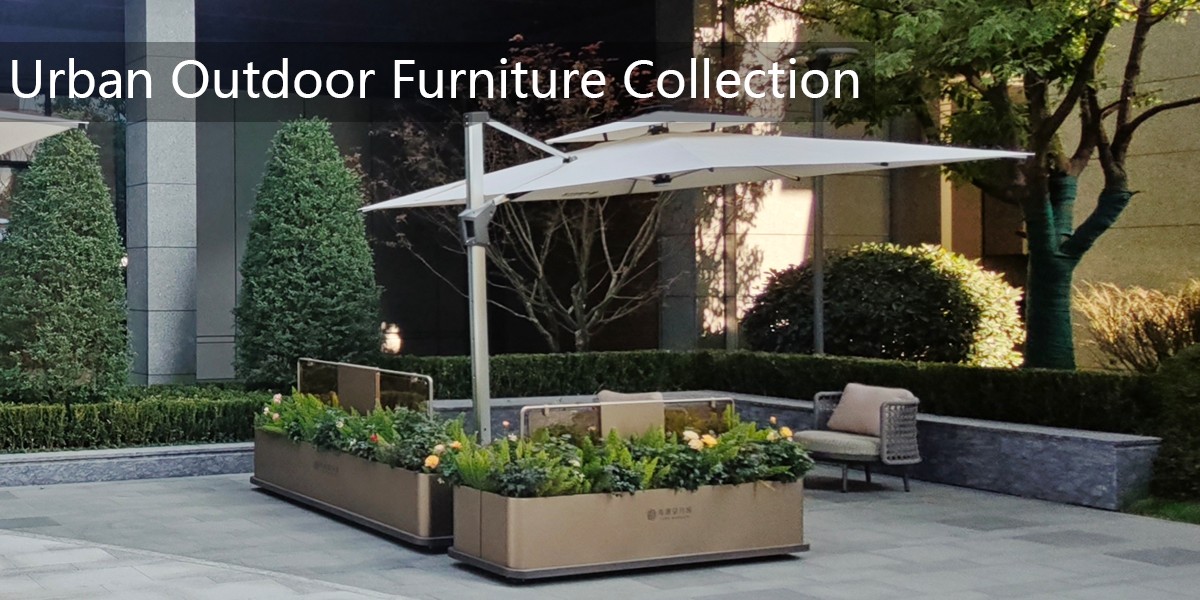
When customers ask our planter box factory how deep our boxes are for a small tree, the most useful answer is: deep enough for the root ball, the tree’s long-term root habit, and a stable soil volume. For most small trees, that means an internal depth of 18 to 24 inches at the absolute minimum, with 24 to 30 inches being the better choice. If the tree will live in the box for many years, or if it is a larger “small” tree such as a dwarf fruit tree, olive, citrus, Japanese maple, or crape myrtle, plan on 30 to 36 inches. Our standard boxes can be built from 12 to 36 inches deep, and custom depths up to 48 inches are possible.
Measure internal depth, not outside height. A box listed as 24 inches tall may offer only 21 to 22 inches of growing depth after the base, rim, and drainage space. The root ball should sit so the top of the root flare is level with or slightly above the final soil line. Do not bury the trunk. A simple rule is: internal depth = root ball height + 4 to 6 inches. For a 10-inch-tall root ball, 18 inches is the minimum; for a 14-inch root ball, 20 to 24 inches; for an 18-inch root ball, 24 to 30 inches.
Small trees do not need unlimited depth. Most feeder roots are in the top 12 to 18 inches of soil, while anchor roots can go deeper. A 24-inch box gives you that feeding zone plus a buffer for moisture and temperature. A 36-inch box can be useful for long-term specimens, but depth without width can create a narrow, unstable column of soil. Width matters. For a small tree, choose an internal width or diameter of at least 24 to 36 inches. Wider boxes are usually more valuable than extra-deep boxes because they support root spread and balance.
Drainage is non-negotiable. We drill drainage holes in every tree planter box unless the design is an open-bottom bed. For a 24-inch box, use several 1/2-inch to 3/4-inch holes and keep the base slightly elevated. Do not add a gravel layer to “improve” drainage; it can create a perched water table. Use a coarse, airy potting mix, not garden soil. If the box sits on concrete, add a saucer or hidden tray that can be emptied. If it sits on soil and you want the tree to root into the ground, an open bottom can work, but it also makes the tree difficult to move.
At our factory, we ask five questions before recommending depth: What species is it? How large is the root ball now? How tall and wide will the tree mature? Will the box stay in one place or move? What is your climate? A tree in a hot, windy patio may need more soil volume; a cold climate may need extra insulation around the roots. A movable box should be shallower and wider for weight control; a permanent box can be deeper.
If you are ordering from our planter box factory, tell us the tree’s name, the current pot size, and the root ball height and width. We can build a box with the right internal depth, drainage, and reinforcement. For most small trees, order 24 to 30 inches deep. For a compact dwarf tree in a temporary home, 18 to 20 inches may be acceptable. For a long-term small tree, choose 30 to 36 inches. The goal is not the deepest box possible; it is a box deep enough for healthy roots and wide enough for a long, stable life.