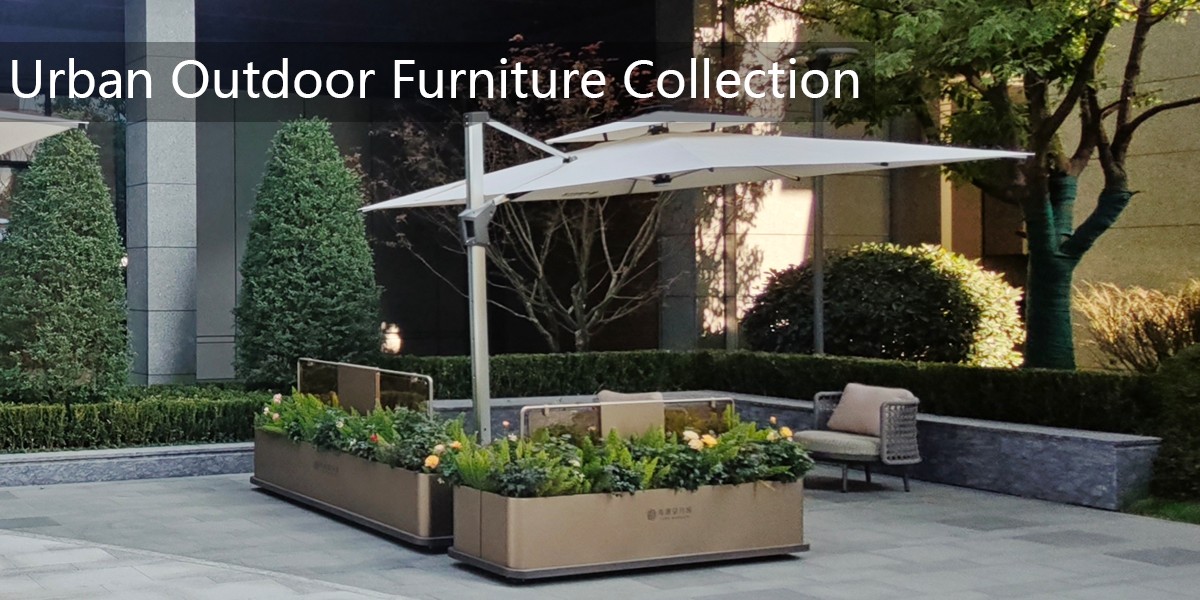
For a commercial project, there is no single fixed price gap between a concrete planter and a fiberglass planter from our planter box factory. The difference depends on size, shape, finish, quantity, reinforcement, delivery distance, and installation method. As a practical factory guideline, a comparable commercial-grade fiberglass planter is often about 10% to 25% lower in unit price than a reinforced concrete planter in medium-to-large custom sizes. For small standard planters and local delivery, cast concrete can be very close in unit price and may even be slightly cheaper. Once freight and installation are included, fiberglass usually becomes more cost-effective because it weighs far less and needs less lifting equipment.
Why the unit prices move in different directions: Concrete planters use cement, aggregate, reinforcement, and heavy molds. Simple standard shapes can be produced efficiently, but weight increases packing, freight, crane time, and structural loading. Fiberglass planters use resin, fiberglass reinforcement, gelcoat or paint, and molds. The material can cost more than basic concrete, but the finished planter is much lighter. For custom shapes, large sizes, roof decks, and projects with difficult access, fiberglass often saves more than the unit-price difference.
As an illustrative example only, for a 36-inch square by 30-inch high commercial planter in a 50-unit order with a simple finish, our factory might quote fiberglass planters in the range of $180–$300 per unit and reinforced concrete planters around $220–$380 per unit before freight. Freight and installation could add roughly $20–$50 per fiberglass unit and $80–$150 per concrete unit, depending on distance and site conditions. In that scenario, fiberglass could be 15%–30% lower on a landed-cost basis. For an 18-inch standard planter delivered locally, the gap may be much smaller, and concrete may compete strongly.
To get the real difference, ask the factory for a landed-cost comparison, not just a unit price. Send the planter dimensions, quantity, finish, color, drainage and irrigation requirements, load limits, delivery address, and whether the project is on grade, a podium, or a roof. A good planter box factory should separate product cost, packing, freight, taxes, and installation so you can compare concrete and fiberglass fairly. In most commercial projects, fiberglass wins when weight, custom design, and total installed cost matter most; concrete wins when the design calls for maximum mass, local sourcing, and a simple standard form. These figures are planning guidance, not a formal quotation; final pricing must be based on your approved drawings and project schedule.